Connected devices that work in every store
We design and build in-store connected products and the dashboards behind them, so head office can see every device in every store without sending someone to check.
In short
Devices in stores run unattended, use up consumables, sit behind patchy signal and lose power during loadshedding. We design the device, its firmware, the cloud it reports into, the dashboard head office watches and the app store teams use, as one system, so a fleet can grow from one store to many without more people checking on it.
Retail
The problems we solve for retailers
Devices in stores run unattended, far from the people responsible for them. These are the problems we design around from the first prototype.
- 01
Unattended devices in many stores
Every device reports in on its own, so head office knows which units are online, where they are and how they're doing, without relying on store staff to check.
- 02
Consumables that run out
Usage is tracked per device, and refill notifications go out so a unit is topped up before a customer finds it empty.
- 03
Proving usage to head office
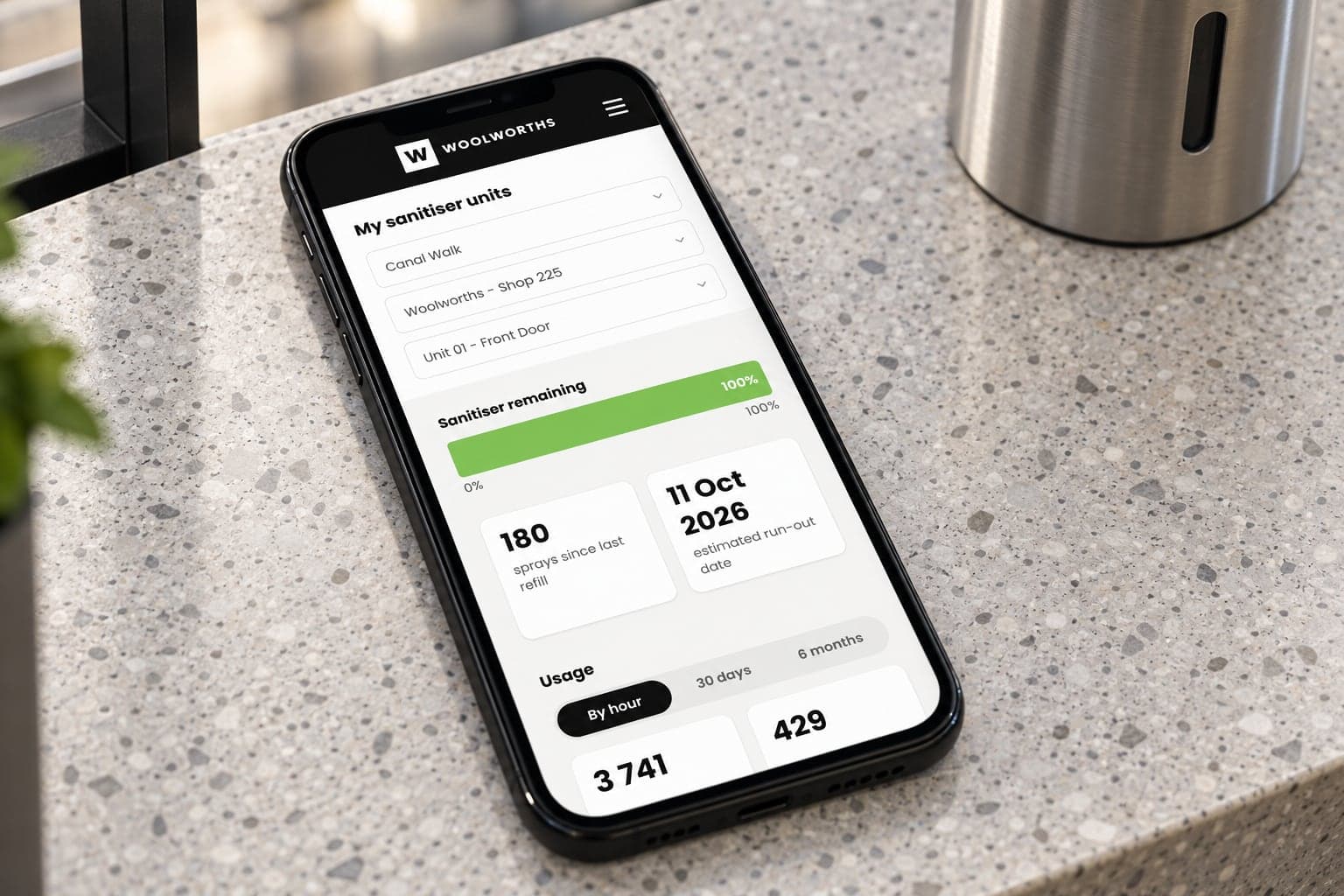
Usage by device, area, store and time of day in a live dashboard, with the data pushed to a reporting database your own BI tools can query.
- 04
Loadshedding and patchy signal
Power cuts and weak in-store signal are part of trading in South Africa. We design devices around their own power and connection where needed, and to recover cleanly when power returns.
- 05
Fewer store visits
Maintenance alerts and system health across every device, and setup designed so store staff can install or troubleshoot a unit themselves instead of waiting for a technician.
- 06
Rolling out to new stores
Adding a device to a new store should be an admin task, not a project. We design onboarding so devices register themselves against the right organisation, store and spot.
How it flows
The Handee Method, from one store to the whole fleet
- 01
Discover
We map where the device will stand, who refills and maintains it, what head office needs to see, and what power and signal are really like in store.
- 02
Prototype
In days, a live end-to-end slice: firmware on real hardware, reporting into the cloud, feeding a working dashboard. You can stand it in a store and watch the data arrive.
- 03
Build
Production firmware, cloud, app and dashboard, built in short reviewed loops, tested and documented as we go.
- 04
Run
Once the fleet is out, we keep watching device health and anomalies and ship updates, so the product stays alive long after launch.
Retail
Put a connected product in every store
Put a connected product in every storeTell us what the device needs to do, where it will stand and what head office needs to know. A few lines is enough to start.
- 01One team for the device, the cloud and the dashboard
- 02A working prototype on real hardware before the full build
- 03Engineers who have already put connected devices into stores
What happens next
- 01We read your briefWe come back to you, usually with a few questions about your stores and the device.
- 02A first callWe talk through the device, the stores, the people who look after it and the data head office needs.
- 03A clear proposalScope, timeline and cost for a first phase, so you know exactly what you're committing to.
Questions
Retail questions, answered
What retailers usually ask us before a rollout.
01What happens when a store loses power or signal?
We design for it from the start. Depending on the device, that can mean its own battery and a cellular connection rather than relying on store Wi-Fi. We work through how it should behave offline and how it recovers when power and signal return, then test that on real hardware.
02Can head office see usage across every store?
Yes, and that's usually the point. Devices report into one platform where you see status, usage and alerts by device, area and store. The data can also flow into a reporting database for the BI tools you already use.
03How do new devices get set up in a store?
We design a simple step for your installers. A device can be added by scanning a QR code on it, then allocated to an organisation and a store, so opening a new store is an admin task rather than a visit from an engineer.
04Can you update devices without visiting stores?
Remote updates are part of how we run connected products after launch. How they're delivered, staged and rolled back depends on your hardware and connection, so we plan it in discovery rather than bolting it on later.
05Do you build the hardware, or just the software?
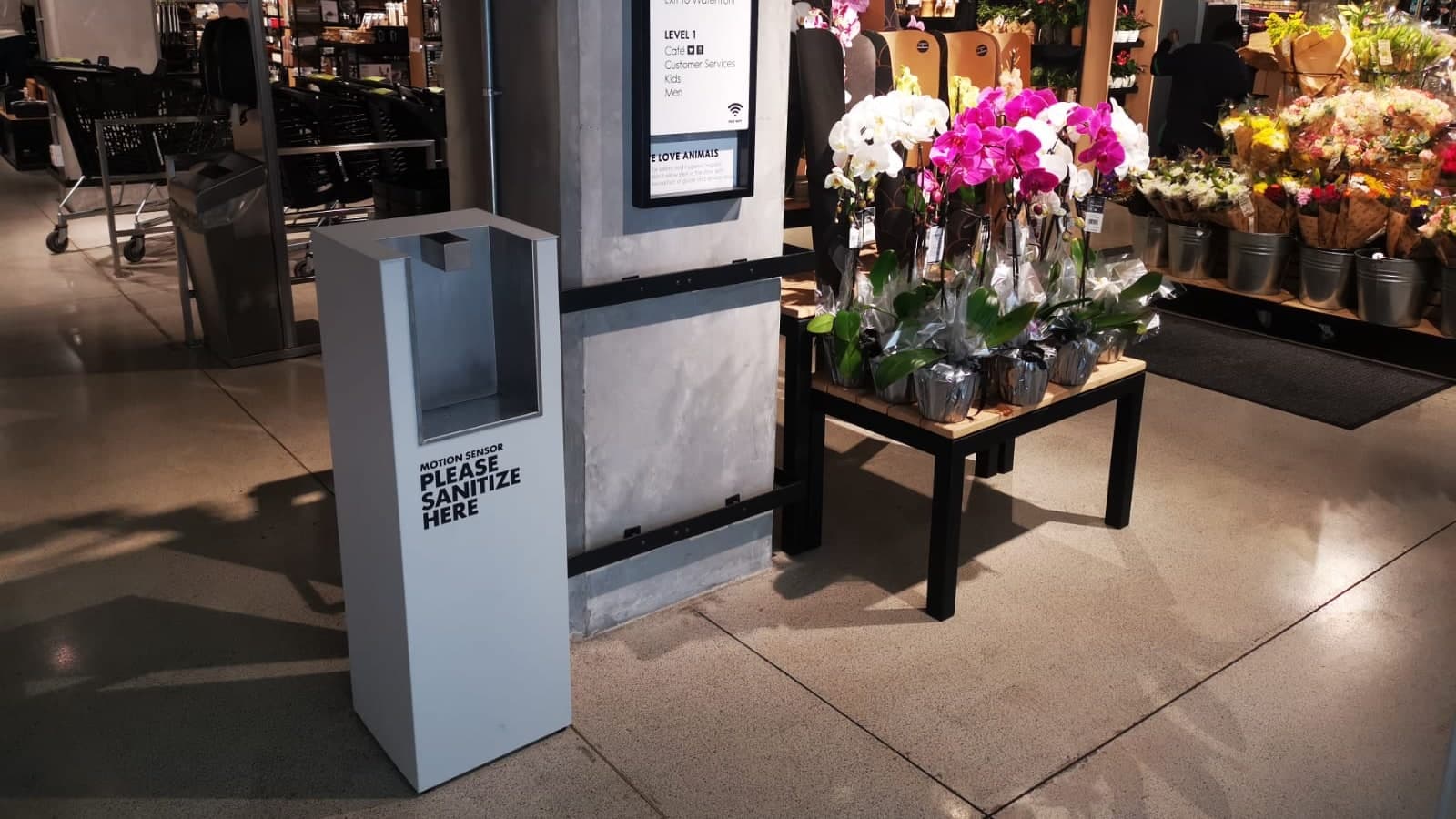
Both. We design custom boards, write the firmware and build the app, dashboard and backend behind them, as we did for the Woolworths sanitiser stations. One team owns the whole system, so there's no gap between the device and the data.